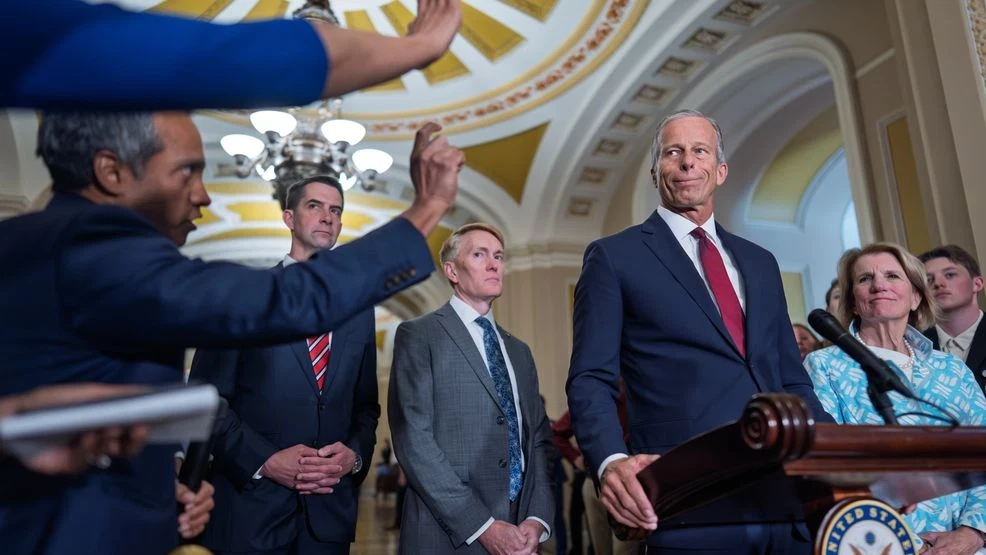
In a significant, bipartisan pushback against executive military authority, the United States Senate voted 50 to 48 to pass a war powers resolution directing President Donald Trump to halt unauthorized military hostilities against Iran.
The vote marks the 10th time Senate Democrats have forced a floor vote on the highly unpopular conflict since missile strikes initially erupted on February 28. Having already cleared the House of Representatives earlier in June, the resolution’s passage marks the first time a concurrent war powers measure has successfully cleared both chambers of Congress during the conflict—sending a stark message to the White House as the Pentagon seeks an additional $80 billion to fund the campaign.

Inside the Tally: Breakaway Republicans Tip the Scales
Despite the Republican Party holding the majority in the Senate, the thin margin was shattered when four GOP lawmakers bucked leadership to side with the Democratic caucus:
- The Defectors: Senators Susan Collins (Maine), Lisa Murkowski (Alaska), Rand Paul (Kentucky), and Bill Cassidy (Louisiana) voted in favor of the resolution, reasserting the constitutional mandate that Congress holds the sole power to declare war.
- The Absences: The resolution narrowly passed due to the absence of Republican Senators Mitch McConnell and Dave McCormick, who did not cast votes.
- The Lone Maverick: Senator John Fetterman (Pennsylvania) was the sole Democrat to cross the aisle, voting against the measure alongside the remaining Republican block.
The Constitutional and Legal Gridlock
While the resolution represents a historic victory for advocates of congressional oversight, its practical application has already sparked a massive separation-of-powers debate between Capitol Hill and the Executive branch.

| The Congressional Stance | The White House Defiance |
| Binding via 1973 Framework: Because the legislation was passed as a concurrent resolution, lawmakers argue it does not require the president’s signature. Under the War Powers Resolution of 1973, a concurrent resolution legally obligates the executive to withdraw troops if Congress directs it. | The “No Hostilities” Loophole: The Trump administration plans to ignore the measure, arguing it is purely symbolic. The White House contends that because a fragile ceasefire is currently being negotiated, U.S. forces are not actively engaged in “hostilities,” rendering the resolution inapplicable. |
| A Judicial Reckoning: Representative Gregory Meeks (D-N.Y.), who championed the bill in the House, stated that lawmakers are preparing to explore all legal avenues. Constitutional experts suggest Congress may have the legal standing to take the President to federal court to enforce the withdrawal. | Veto Threat Looming: Mainstream GOP leaders and White House officials maintain that the War Powers Act itself is unconstitutional. While some media outlets frame the measure as veto-proof because of its concurrent status, the administration insists it will treat any further legislative constraints as non-binding. |
A Delicate Timing for the Administration
The timing of the vote is particularly embarrassing for the White House. It comes just days after President Trump signed a preliminary Memorandum of Understanding outlining a 60-day window to negotiate a broader nuclear deal with Tehran—an agreement heavily criticized by hardline Republicans over a proposed $300 billion reconstruction fund for Iran.
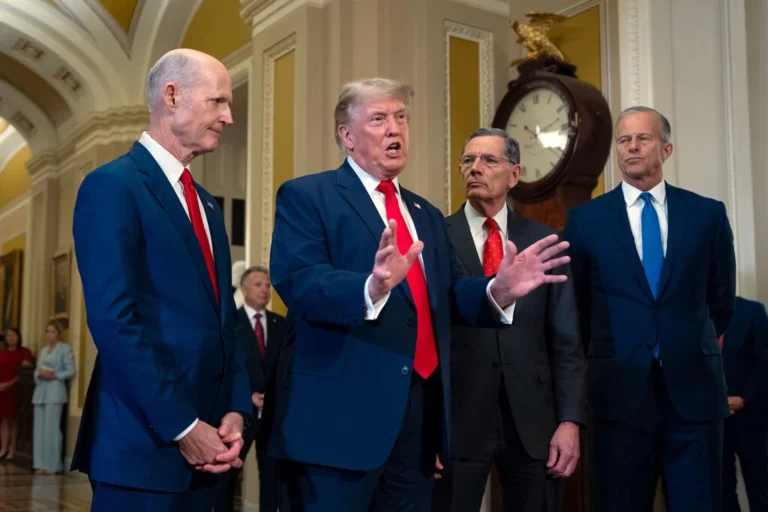
With President Trump scheduled to meet with disgruntled Senate Republicans on Capitol Hill tomorrow, the passage of this resolution underscores just how shaky the political consensus behind the administration’s foreign policy has become.
Trendsetter Tribune