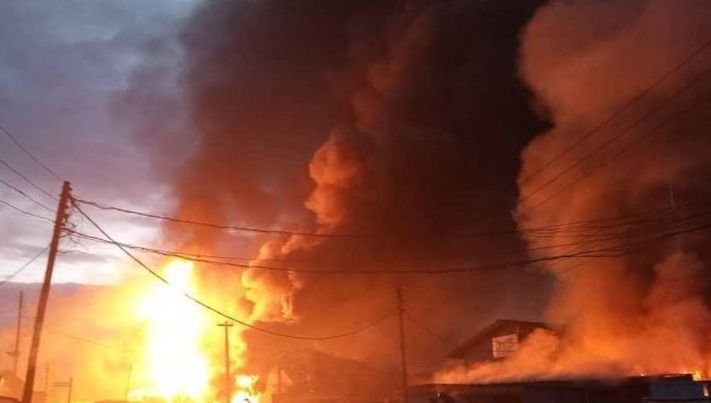
A sudden, powerful explosion in the heart of Ikeja’s bustling commercial district sent hundreds of shoppers and traders fleeing in panic, as initial rumors of a coordinated bomb blast rapidly tore through social media networks.
The blast occurred on Kodesho Street, a highly congested trading zone located right on the periphery of Lagos’s famous Computer Village. Within minutes of the detonation, graphic videos of thick smoke and shattered store windows surfaced on WhatsApp and X, accompanied by chaotic reports claiming an improvised explosive device (IED) had targeted the market.

Anatomy of the Incident
While the word “bomb” instantly paralyzed the commercial hub, subsequent assessments by the Lagos State Police Command and emergency first responders revealed a very different reality.
- The Epicenter: The explosion originated inside a retail shop specializing in closed-circuit television (CCTV) security equipment.
- The Structural Failure: Initial technical evaluations by the Explosive Ordnance Disposal (EOD) unit indicate that the blast was not an act of terrorism or sabotage, but rather a violent industrial accident triggered by the combustion of high-capacity stored inverter batteries or compressed electronic components.
- The Human Cost: Miraculously, no fatalities were recorded directly inside the blast radius. However, several nearby traders and commuters sustained varying degrees of lacerations from flying shards of glass and structural debris, while dozens more were treated for minor injuries suffered during the frantic, claustrophobic stampede that followed the sound.
The Blueprint of Lagos Border Panic
The speed with which an infrastructure failure transforms into a mass “bomb panic” reflects deep-seated anxieties shared by Lagos residents. Whenever an unexplained explosion rocks a high-density trading center, local fear typically stems from two specific origins:

| Origin of Panic | The Underlying Reality |
| Sleeper Cell Anxieties | With active insurgencies in the northeast, residents remain perpetually hyper-vigilant that extremist elements might attempt a high-profile attack within Nigeria’s economic nerve center. |
| The Shadow of 2002 | Lagos carries generational trauma from the 2002 Ikeja Cantonment disaster, where an accidental military armory fire triggered massive high-caliber bomb detonations, leading to a city-wide stampede that claimed over 1,100 lives. |
| Regulated Storage Deficits | The commercial landscape relies heavily on heavy-duty diesel generators and complex inverter battery configurations stored in tightly packed, poorly ventilated concrete stalls, creating structural powder kegs. |
Securing the Scene
The Lagos State Police Command deployed emergency units to cordon off Kodesho Street, preventing looting and ensuring the structural integrity of neighboring buildings wasn’t compromised.
State authorities issued an emergency brief urging calm, reminding the public that premature social media reports frequently mischaracterize industrial accidents as terror attacks, causing unnecessary civic disruption. Safe-handling regulations regarding commercial battery storage banks are expected to face strict regulatory reviews following the incident.
Trendsetter Tribune