The Democratic primary runoff for Texas’s 35th Congressional District has evolved into one of the most volatile and deeply uncomfortable contests of the midterm cycle.
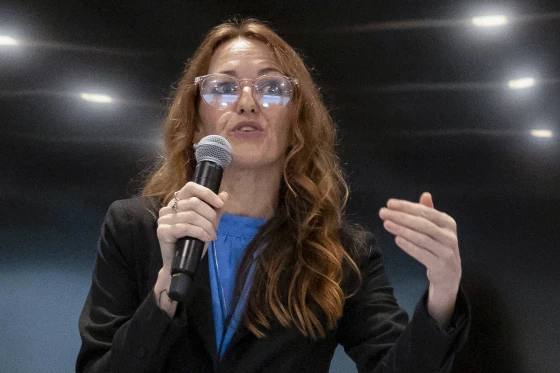
Maureen Galindo—a housing activist and sex therapist—advanced to the primary runoff against moderate Democrat and former Bexar County Sheriff’s Deputy Johnny Garcia. While Galindo initially positioned herself as a fiery, anti-establishment outsider, her campaign has since been thoroughly ostracized by local, state, and national Democratic leaders following a string of rhetoric widely condemned as virulently antisemitic.
The reality of how a candidate formally rebuked by her own party secured a spot in the runoff comes down to a mix of early grassroots messaging, a fractured primary field, and a massive wave of shadowy, late-stage campaign spending.
1. Navigating a Crowded, Low-Turnout Primary
Before the national controversy erupted, Galindo built an early following through an aggressive digital presence. Operating in a newly redrawn district that stretches across San Antonio and several surrounding South Texas counties, she ran a highly visible progressive campaign focused heavily on local housing activism and a pledge to completely abolish U.S. Immigration and Customs Enforcement (ICE).
When the initial primary took place, the crowded field fractured the vote:
- The Vote Split: Galindo finished first in the field with 29.2% of the vote (15,931 votes), while Garcia closely followed with 27.0% (14,743 votes).
- The Low-Turnout Dynamic: Because no single candidate captured more than 50% of the vote, the race automatically advanced to a two-person runoff. In low-turnout primary cycles, an active, highly motivated grassroots base on social media can easily propel an anti-establishment candidate into the top tier before mainstream voters or party leaders fully vet their platform.
2. The Rhetoric That Triggered the Total Party Rebuke
The intense backlash that completely altered the race did not peak until after the initial primary field had already been narrowed down to the runoff. Throughout May, Galindo’s rhetoric on Israel, Gaza, and Jewish influence pivoted into territory that the Democratic establishment deemed entirely disqualifying.
The breaking point for the party occurred when Galindo posted a carousel on Instagram outlining her proposed federal legislation:
“Turn Karnes ICE Detention Center into a prison for American Zionists and former ICE officers for human trafficking. It will also be a castration processing center for pedophiles which will probably be most of the Zionists.”
Galindo followed up those comments during a local radio appearance, stating that politicians who accept pro-Israel campaign donations should be “tried for treason.” She previously invoked older antisemitic tropes online, suggesting that Jewish people control Hollywood and invoking references to the “synagogue of Satan.”
While Galindo has forcefully denied being antisemitic—arguing her targets are strictly “billionaire Zionists” funding prison systems and global conflicts—the backlash from her own party has been absolute. Progressive icon Rep. Alexandria Ocasio-Cortez slammed the remarks as “bigoted garbage and antisemitism,” while House Minority Leader Hakeem Jeffries formally labeled her rhetoric “vile and disqualifying.” Democratic Reps. Josh Gottheimer and Jared Moskowitz went a step further, promising to force an expulsion vote against Galindo every single day the House is in session if she manages to win the seat.
3. The Shadowy PAC Propping Up Her Campaign
As the mainstream Democratic Party scrambled to isolate Galindo—with the fundraising platform ActBlue completely cutting off her account—campaign finance filings exposed a strange reality: her runoff campaign was being kept afloat by hundreds of thousands of dollars in outside spending.
National Democrats have openly accused Republicans of meddling in the primary to engineer a toxic matchup for November. A mysterious, newly registered political action committee called Lead Left PAC has dropped more than $800,000 on pro-Galindo mailers and anti-Garcia attack ads targeted at Democratic voters.
| The District Dynamic | The Strategic Calculus |
| The Voter Base | The 35th district is a competitive area that Donald Trump carried by 10 percentage points in 2024. |
| The Democratic View | Party insiders argue that conservative donors are intentionally funding Galindo because her extreme, controversial rhetoric makes her the easiest possible target for a Republican flip in the general election. |
| The Republican View | While House Speaker Mike Johnson denied direct knowledge of the scheme, he weaponized the infighting, calling Galindo’s platform “a perfect example of where the Democratic Party is going.” |
Galindo has denied any knowledge of or coordination with Lead Left PAC, maintaining that she is executing an autonomous, grassroots effort. However, local groups like the Tejano Democrats have stuck by their early endorsements of her, citing Garcia’s moderate policy positions on law enforcement and immigration as their primary concern.
As voters head to the polls, the race stands as a stark warning of the modern primary landscape: a mix of low voter turnout, intense digital echo chambers, and tactical cross-party funding can elevate a candidate to the brink of a major party nomination, even as the party establishment frantically tries to tear down the platform they helped create.
Trendsetter Tribune