SACRAMENTO, CA — The explosive financial cost of the federal government’s controversial, short-lived military deployment in Southern California has finally been laid bare.
Following months of bureaucratic delays, a newly fulfilled Freedom of Information Act (FOIA) request submitted by California Governor Gavin Newsom’s office reveals that the Trump administration spent at least $111.2 million in federal taxpayer funds to federalize the California National Guard and deploy active-duty Marines to the streets of Los Angeles. The disclosure has reignited a fierce political war over the boundaries of executive power and the alleged weaponization of the U.S. military for domestic political objectives.
The FOIA Disclosure: Exposing the Price Tag of ‘Political Theater’
The financial data, extracted directly from the Department of Defense following multiple legal follow-ups by state officials, provides the first official accounting of the highly contested June 2025 deployment.
Taking to social media to announce the findings, the Governor’s Press Office blasted the expenditure, emphasizing that the $111.2 million figure represents solely the military ledger and completely excludes massive, rolling civilian damages, local law enforcement overtime, and broader regional economic disruptions.
“The illegal militarization of Los Angeles and federalization of @TheCalGuard cost taxpayers at least $111.2 MILLION — and that’s not including civilian costs,” the Governor’s Office stated. “All to intimidate Californians and politicize our military. It’s sick Trump and Hegseth used our service members this way!”
The Roots of the Standoff: A Constitutional Crisis in Los Angeles
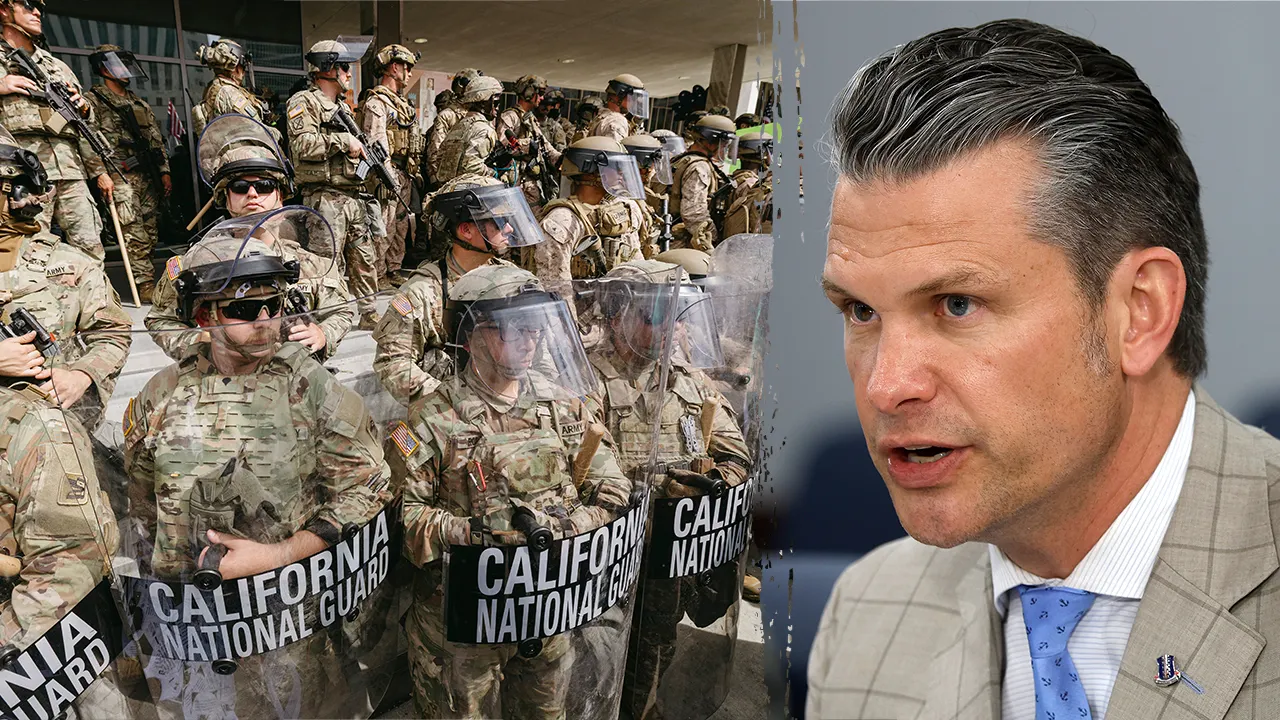
The California National Guard federalization cost stems from a historic constitutional clash that peaked in mid-2025. Following intense civilian protests triggered by large-scale federal immigration enforcement actions and workplace raids in the Los Angeles metro area, President Donald J. Trump and Secretary of Defense Pete Hegseth bypassed state authority to execute a forced takeover of California’s military assets.
Under 10 U.S.C. § 12406, the administration federalized approximately 4,000 members of the California National Guard and deployed an additional 700 active-duty U.S. Marines. Governor Newsom and California Attorney General Rob Bonta immediately filed a high-profile lawsuit (Newsom v. Trump), asserting the deployment directly violated the 19th-century Posse Comitatus Act, which strictly bars the federal military from acting as a domestic civilian police force.
The Anatomy of the Deployment and Final Resolution
- The Legal War: U.S. District Judge Charles Breyer initially ruled the deployment illegal, famously stating the administration was attempting to create a “national police force with the president as its chief.” While an appellate panel temporarily paused that order, the legal momentum heavily favored the state.
- The Retention Backlash: The deployment severely fractured military morale. Internal Pentagon data revealed that out of 72 soldiers whose enlistments expired during the operation, only 15 chose to re-enlist—a catastrophic 21% retention rate compared to the Guard’s standard 60% average.
- The Capitulation: Facing consecutive judicial defeats—including a landmark 6-3 U.S. Supreme Court ruling regarding similar executive overreach in Illinois—the Trump administration officially capitulated in late December 2025, withdrawing federal control and returning the troops to state command.
| Expense Category (DoD Data) | Core Operational Target | Verified Federal Cost |
| Troop Mobilization | Federalization of 4,000 CalGuard Personnel | Included in Base Allocation |
| Marine Corps Augmentation | Deployment of 700 Active-Duty U.S. Marines to LA | Included in Base Allocation |
| Total Military Outlay | Baseline Pentagon Operational Expenses | $111.2 Million |
| Excluded Liabilities | Municipal police overtime, civilian damages, economic friction | Unquantified (Local/State Funded) |
The Future Outlook: The Fight Over the ‘Warrior Ethos’
While the physical troops have long since demobilized and returned to their families, the political fallout from the California National Guard federalization cost continues to reverberate through Washington and Sacramento.
Supporters of the administration’s original move, including Defense Secretary Hegseth, maintain that domestic deployments are vital to establishing “100% operational control” over national sovereignty and border defense. The Pentagon has repeatedly countered that using the Guard to protect federal properties and personnel falls squarely within executive emergency powers.
However, for California leaders, the $111.2 million price tag serves as a powerful legislative weapon. Moving forward, congressional Democrats and independent watchdog groups are preparing to leverage these newly uncovered figures to push for sweeping statutory revisions to the Insurrection Act and federalization laws, aiming to permanently strip the executive branch of its ability to unilaterally commandeer state national guards for domestic political operations.
Trendsetter Tribune