 By Trendsetter Tribune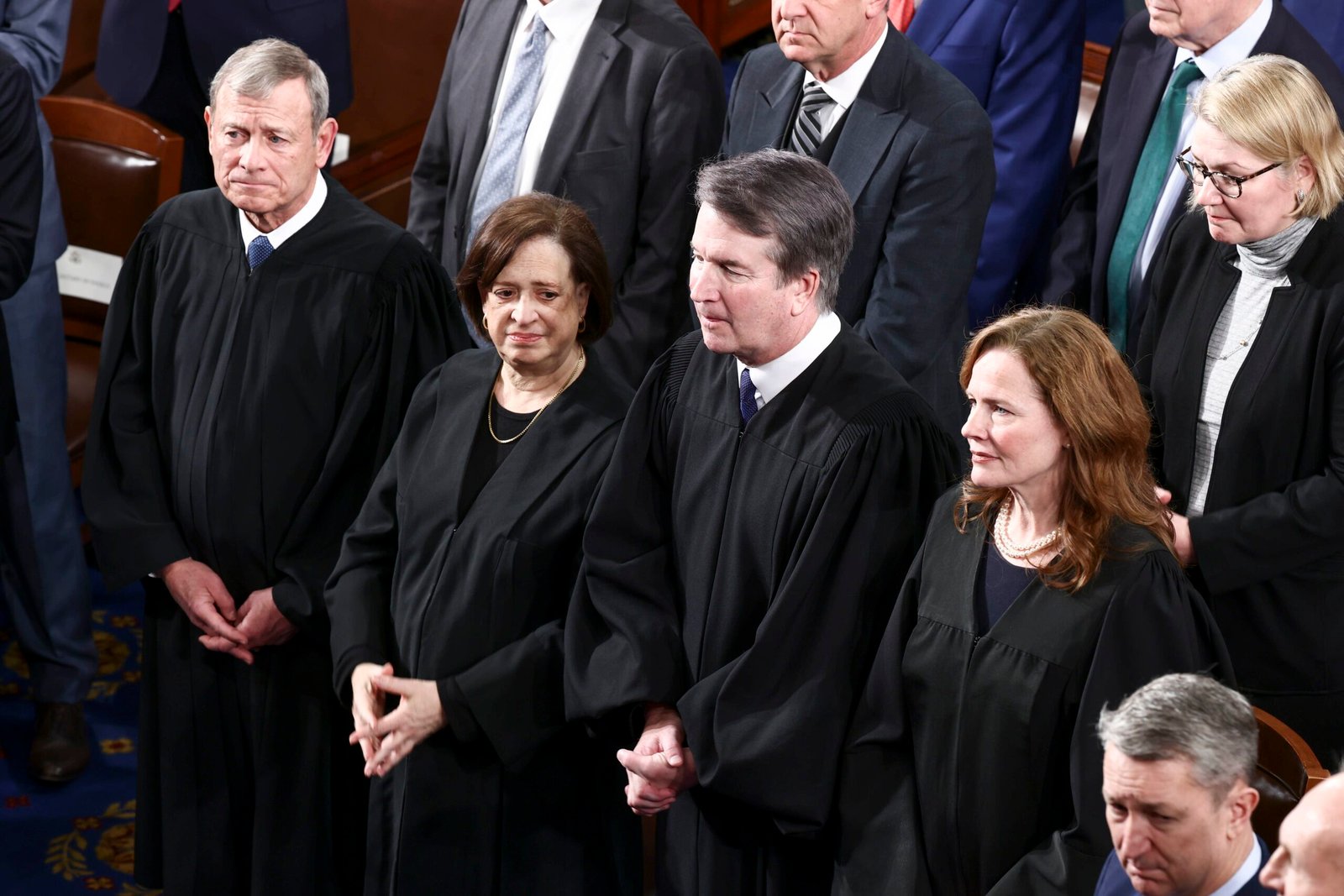
The U.S. Supreme Court heard oral arguments on Tuesday, March 24, 2026, in a case that could fundamentally redefine how and where migrants are allowed to seek asylum. The case, Noem v. Al Otro Lado, centers on a “metering” or “turnback” policy that prevents migrants from stepping onto U.S. soil to make asylum claims when ports of entry are deemed overcrowded.
The core of the debate rests on a single preposition: whether the law applies to those “at” a port of entry or only those already “in” the United States.
The Arguments: A Literal Interpretation
The Trump administration is asking the Court to overturn a 2024 Ninth Circuit ruling that favored asylum seekers.
- The Administration’s Stance: Justice Department lawyer Vivek Suri argued for a strict territorial boundary. “You can’t ‘arrive in the United States’ while you’re still standing in Mexico. That should be the end of this case,” he told the justices. The administration contends that federal law only triggers an obligation to “inspect and process” once a person is physically on U.S. soil.
- The “Meter” Tool: The administration describes metering as a “critical tool” for managing border surges and preventing the physical overwhelming of federal facilities.
The “No Actual Policy” Critique
During the session, the more liberal justices expressed concern that the government’s interpretation creates a legal vacuum where officials can avoid their statutory duties simply by moving a “virtual line” a few inches onto the Mexican side.
- Justice Sonia Sotomayor noted that the current approach feels arbitrary, pointing out that while general travelers are processed, those specifically seeking refugee status are being blocked. “They’re letting everybody else in… but they’re not permitting the people who come to the line who want to claim refugee status,” she observed.
- The Advocacy View: Kelsi Corkran, arguing for the group Al Otro Lado, argued that “arrival” has historically been understood to include those who present themselves at a port of entry. She cautioned that the government’s stance would create a “perverse incentive” for migrants to cross illegally between ports of entry, as they would gain more legal rights once physically “in” the U.S. than they have while waiting “at” the gate.
Why It Matters Now
While the specific “metering” memoranda at the heart of the original lawsuit were rescinded by the previous administration, the current administration is seeking a definitive ruling to ensure they have the legal authority to revive the practice if border conditions worsen.
The conservative majority on the court appeared sympathetic to the administration’s territorial argument. Justice Amy Coney Barrett pressed the advocates on where, exactly, the legal line should be drawn: “How close do you have to be to the border? Could you say that someone arrives in the United States if they’re at a portion of the border that…”
What’s Next?
A ruling is expected by the end of June 2026. This decision will likely serve as the legal foundation for the administration’s broader efforts to restrict asylum, including the “indefinite refugee ban” and other executive actions currently winding through lower courts.