When the two economic titans of West Africa lock arms to issue a coordinated diplomatic rebuke against South Africa, it is a clear sign that a regional problem has escalated into a continental crisis.
A fresh, highly volatile wave of anti-immigration violence across major South African transit hubs has triggered a severe diplomatic showdown. Ghana and Nigeria have officially joined forces to condemn what they describe as a “shambles” of migrant safety, formally demanding accountability from President Cyril Ramaphosa’s government.
With viral social media footage exposing street-level violence and grassroots activist networks calling for total boycotts, the escalating row doesn’t just threaten local businesses—it threatens to rip apart the foundational promise of Pan-African unity.
The Incidents Shaking the Subcontinent
The diplomatic emergency reached a boiling point following a sequence of aggressive anti-immigrant demonstrations led by a newly prominent citizen movement known as “March and March,” alongside established vigilante groups like Operation Dudula.
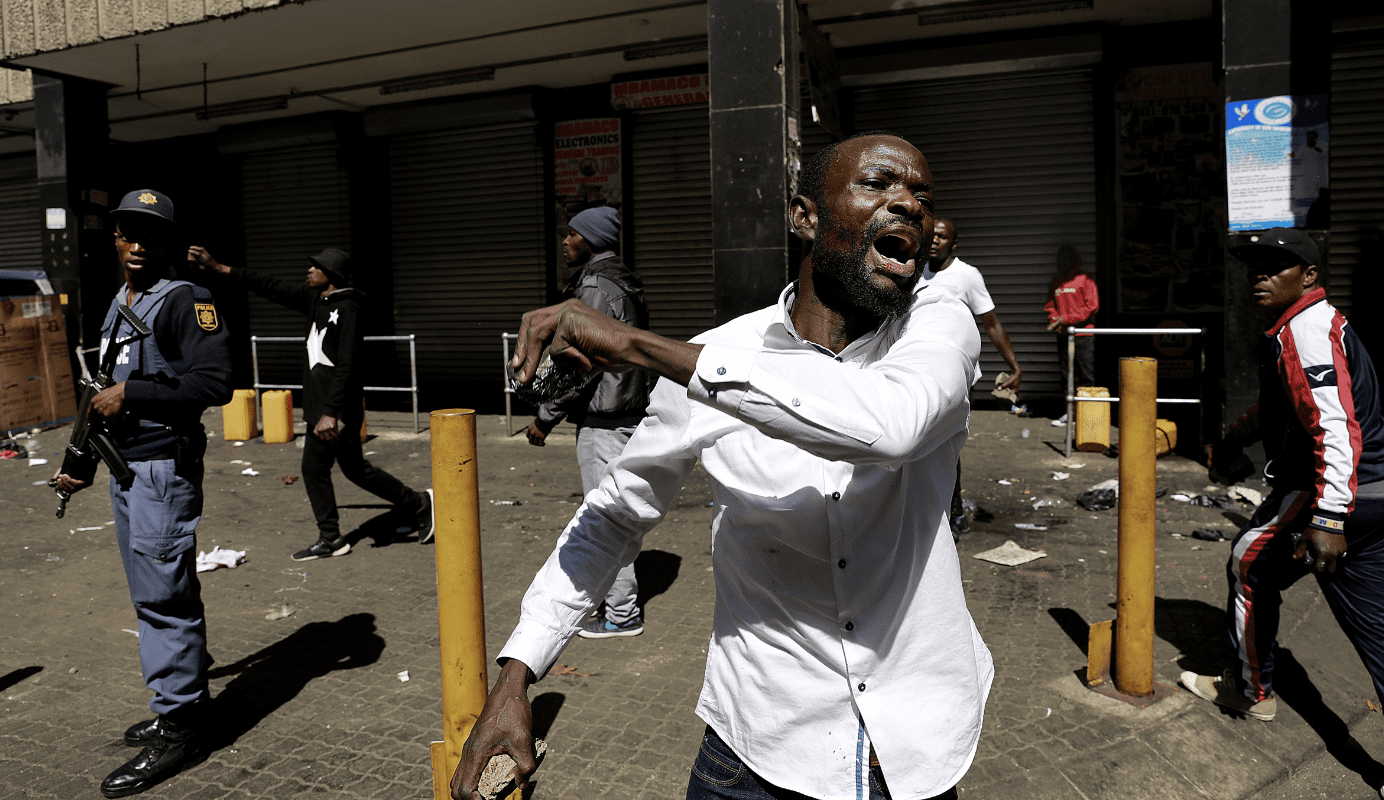
Unlike previous, sporadic outbreaks of unrest, the April and May 2026 clashes have targeted foreign nationals directly at their homes, storefronts, and local community spaces in Durban, Johannesburg, and Pretoria.
Several key flashpoints have turned a localized policing issue into a multi-national incident:
- The KwaZulu-Natal Target: A video heavily circulated online showed a Ghanaian national surrounded by a hostile crowd in KwaZulu-Natal, forced at whipped point to check his documentation on camera and ordered to leave the country.
- The Fatalities in Johannesburg: Nigerian authorities have flagged the suspicious deaths of at least two Nigerian nationals during the height of the mid-April anti-migrant marches, directly demanding independent autopsy reports from South African law enforcement.
- The Institutional Exclusions: Human rights observers have documented organized vigilante blockades outside public hospitals and local schools, effectively denying healthcare and education access to immigrants regardless of their legal residency status.
The response from West African capitals was immediate. Ghana’s Foreign Affairs Minister, Samuel Okudzeto Ablakwa, took the unprecedented step of summoning South Africa’s envoy, warning bluntly that continued state inaction would embolden street-level militias. Days later, Nigeria’s Minister of Foreign Affairs, Bianca Odumegwu-Ojukwu, duplicated the move in Abuja, demanding complete transparency, full case files, and unhindered access for the victims’ families.
The Strategic Escape From Apartheid History
What makes the current wave of anti-immigrant rage particularly bitter for leaders in Accra and Abuja is the deep betrayal of modern history.
During the darkest decades of the anti-apartheid struggle, both Ghana and Nigeria functioned as “frontline states” in exile. Nigeria funnelled millions of dollars into the African National Congress (ANC), while Ghana provided vital passports, logistical support, and physical sanctuary for South African liberation fighters fleeing state violence.
Today, that structural debt appears entirely erased from the popular memory of a younger, economically frustrated South African electorate facing a historic 43% unemployment rate.
| The Socioeconomic Catalyst | The Political Consequence |
| 43% Real Unemployment | Local populations are systematically scapegoating foreign nationals for systemic economic stagnation and poor public service delivery. |
| Vigilante Mainstreaming | Groups like Operation Dudula and March and March have successfully weaponized this frustration, shifting from fringe street movements into registered, politically active pressure groups. |
| The “Phala Phala” Shadow | Weakened by ongoing domestic scandals, the current ANC administration faces accusations of executing an intentionally soft policing response to avoid alienating anti-immigrant voters. |
Pretoria’s Pushback and the “Fake News” Defense
Faced with international condemnation, South Africa’s Minister of International Relations and Cooperation, Ronald Lamola, has engaged in frantic damage control. In public statements and direct phone calls to his counterparts, Lamola has maintained that the government is moving “swiftly to condemn acts of confrontation and intimidation.”
However, Pretoria’s defense strategy has relied heavily on minimizing the scale of the crisis, repeatedly warning against “manipulated footage and divisive narratives” circulating on social media. While Ramaphosa used his Freedom Day address to affirm that South Africans “did not walk alone into freedom,” his parallel public assertions regarding the urgent need to weed out “undocumented migration” have drawn fierce backlash. Human rights organizations argue that conflating economic anxieties with national security threats only serves to legitimize vigilante actions on the ground.
A Continental Backlash Looming
The diplomatic consequences of this crisis are rapidly expanding beyond formal letters of protest. Ghana has already formally petitioned the African Union (AU) to force a mandatory debate on “Xenophobic Attacks against African Nationals” at the upcoming Mid-Year Coordination Summit in Cairo.
On the streets of Lagos and Accra, the rhetoric is turning distinctly retaliatory. Local youth groups and legislative blocks are already threatening targeted economic responses against prominent South African corporate mainstays operating across West Africa—including MTN, Shoprite, and Standard Bank.
If Pretoria continues to treat these violent street purges as a routine domestic policing matter rather than a profound human rights emergency, it risks completely isolating itself from the rest of the continent. You cannot champion the economic integration of the African Continental Free Trade Area (AfCFTA) while simultaneously allowing the citizens of your trading partners to be hunted through the streets of your capital.
Trendsetter Tribune