 By Trendsetter Tribune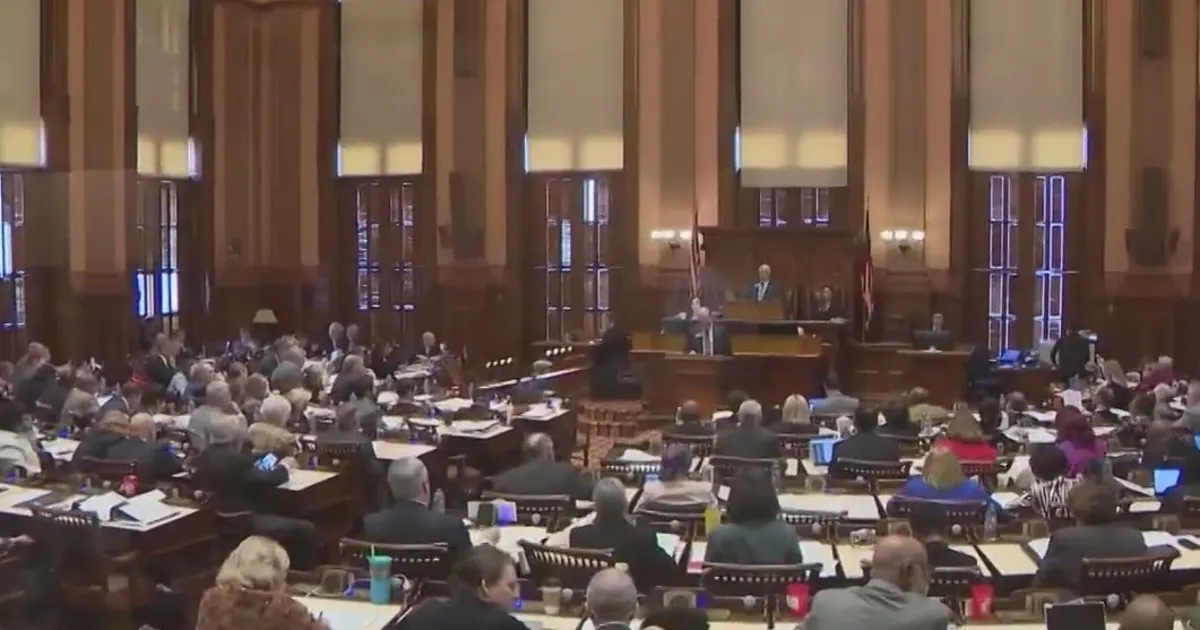
On Friday, March 27, 2026, the Georgia House gave final passage to HB 369, a sweeping and controversial elections bill that would mandate nonpartisan elections for several key local offices—but only in the state’s five most populous (and heavily Democratic) counties.
The move is being characterized by Democrats as a “blatant power grab” designed to help Republicans remain competitive in the Atlanta suburbs, while GOP sponsors argue the change is necessary to “depoliticize” public safety.
The Scope of the Bill
If signed into law, the mandate would take effect in 2028 and apply to the following offices in Fulton, DeKalb, Gwinnett, Cobb, and Clayton counties:
- District Attorneys and Solicitors General
- County Commissioners
- Tax Commissioners
- Superior Court Clerks
Notably, County Sheriffs were exempted from the bill and will continue to run as partisan candidates.
The “Political Maneuver” Argument
The timing and geographic focus of the bill have drawn sharp criticism from election analysts and local leaders:
- Targeting Blue Strongholds: The five affected counties are the core of Georgia’s Democratic base. Cobb and Gwinnett, once Republican suburban anchors, have shifted decisively toward Democrats over the last decade.
- The “Fani Willis” Factor: Many view the bill as a direct response to high-profile Democratic prosecutors. All five district attorneys in these counties are currently Black Democratic women, including Fani Willis, who has been a frequent target of GOP criticism.
- The Republican Advantage: In deep-blue districts, the “Democratic” label often serves as a shorthand for victory. By removing party labels, Republicans hope to appeal to moderate or “low-information” voters who might otherwise reflexively vote for a Democrat.
The GOP Defense: “Public Safety, Not Politics”
State Senator John Albers (R-Roswell), the bill’s primary sponsor, defended the measure during Thursday’s Senate debate, framing it as a way to ensure county leaders focus on governance rather than party platforms.
- The “World Cup” Rationale: Albers argued that with major global events coming to Atlanta (like the 2026 World Cup), local agencies need to work together without “partisan games” hindering public safety.
- Standardization: Supporters pointed out that Georgia already has nonpartisan elections for judges and school boards, and argued this simply extends that logic to other “non-legislative” administrative roles.
“We Will See You in Court”
The reaction from metro Atlanta leadership was immediate and fierce. Fulton County D.A. Fani Willis blasted the legislation as “racist, sexist, and clearly unconstitutional,” noting that it targets a specific demographic of voters and leaders while leaving the rest of the state’s 154 counties untouched.
The District Attorneys’ Association of Georgia has also opposed the bill, and several county commissions have already signaled they are preparing to sue the state the moment Governor Brian Kemp signs the legislation.