 By Trendsetter Tribune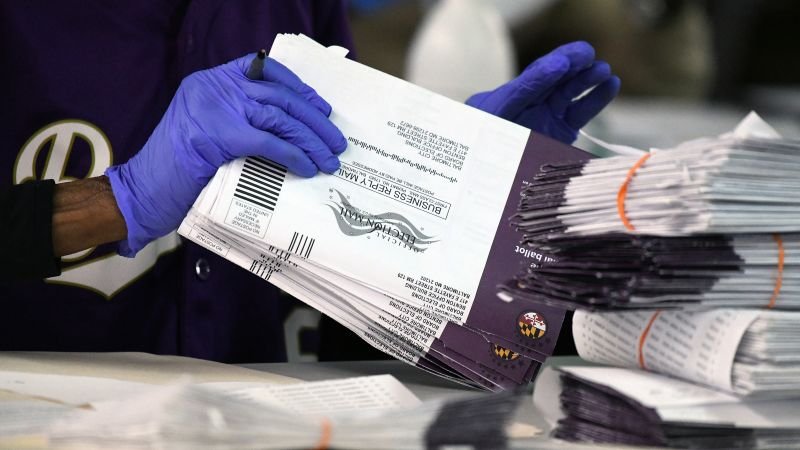
The Supreme Court is closing out a high-stakes week that could fundamentally reshape the 2026 midterm elections and the definition of American citizenship. Following oral arguments on Monday, March 23, 2026, the conservative majority appeared prepared to strike down state laws that allow mail-in ballots to be counted if they arrive after Election Day—even if postmarked on time.
This development serves as a jurisdictional “appetizer” for the even larger case on the horizon: April 1, 2026, when the Court will hear arguments on the President’s executive order seeking to end birthright citizenship.
The Mail-In Ballot Case: Watson v. RNC
The Court is reviewing a Mississippi law that allows a five-day grace period for mail ballots postmarked by Election Day. This case has far-reaching implications for 14 other states—including California, Illinois, and Washington—that currently allow similar grace periods.
- The Conservative Scepticism: During arguments, several GOP-appointed justices, including Justice Amy Coney Barrett and Chief Justice John Roberts, questioned whether federal law mandates a single “Election Day” rather than an “election month.”
- The Impact: If the Court rules against these grace periods, it could lead to the “crushing” (disqualification) of hundreds of thousands of ballots in the 2026 midterms. In 2024 alone, California processed over 400,000 ballots that arrived after the deadline but were postmarked on time.
- The Timeline: A final ruling is expected by late June 2026, which would leave election officials in affected states only a few months to overhaul their systems before November.
The Main Event: Trump v. Barbara (April 1)
Next Wednesday, the justices will turn to Executive Order 14160, the administration’s boldest attempt to reinterpret the 14th Amendment. The order seeks to deny automatic citizenship to children born on U.S. soil if their parents are in the country unlawfully or on temporary visas.
| Argument Pillar | Administration Position (Sauer) | Challengers’ Position (ACLU/CASA) |
| “Subject to Jurisdiction” | Means “complete political allegiance”; doesn’t apply to those here illegally. | Means “subject to U.S. laws”; applies to everyone physically on U.S. soil. |
| Historical Precedent | Claims Wong Kim Ark (1898) only applied to legal residents. | Argues 150 years of law confirms the “soil-and-flag” principle regardless of parentage. |
| Statutory Authority | Argues the President has “inherent authority” to define citizenship for border security. | Argues only Congress can change naturalization laws, and only an Amendment can change the 14th. |
The “Narrow Path” Out
Legal analysts, including those at SCOTUSblog, suggest the Court might seek a “middle way” to avoid a constitutional earthquake. One possibility is a ruling that the Executive Order violates existing federal statutes (8 U.S.C. § 1401), which explicitly grants citizenship to those “born in the United States.” By ruling on statutory grounds, the Court could strike down the order without having to definitively “kill” the 14th Amendment’s birthright guarantee.