 By Trendsetter Tribune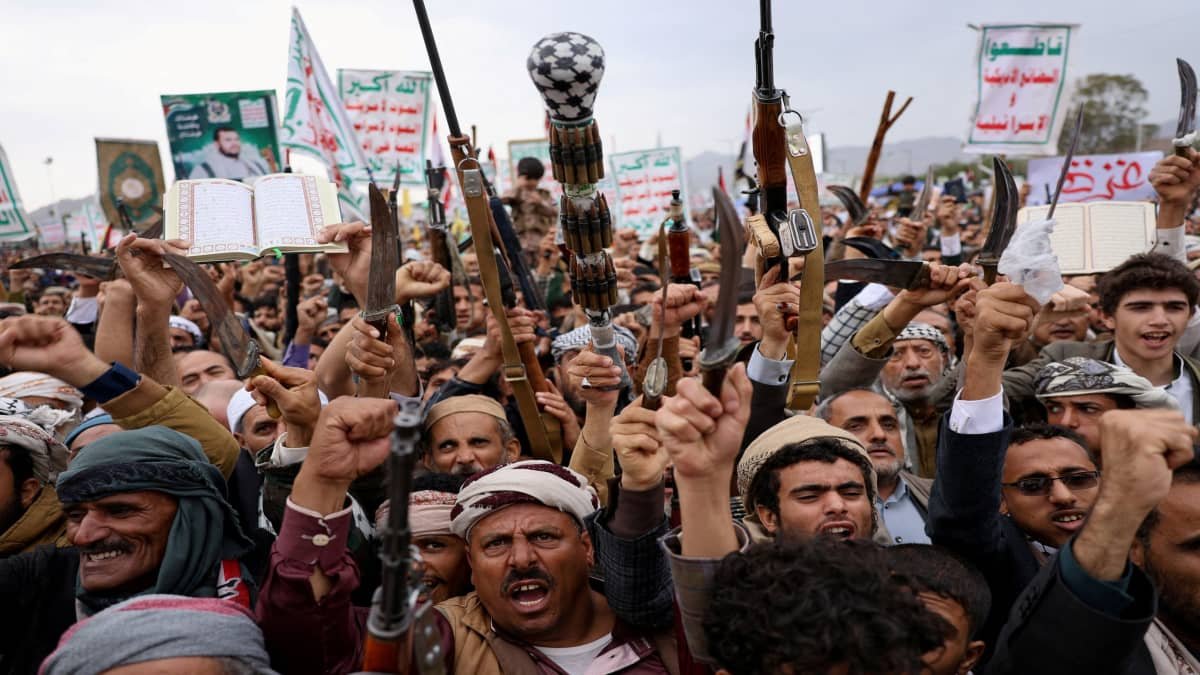
On Saturday, March 28, 2026, the month-long conflict with Iran entered a dangerous new phase as Yemen’s Houthi rebels officially declared their military intervention. The group launched a series of ballistic and cruise missile attacks targeting southern Israel, marking their first direct involvement since the joint U.S.-Israeli campaign against Tehran began in late February.
The escalation comes just as the first wave of a massive U.S. military reinforcement—the USS Tripoli and its 2,500 Marines—arrived in the region to bolster “maximum optionality” for the administration.
The Houthi Offensive: Opening the Southern Front
In a televised address, Houthi military spokesperson Yahya Saree announced that the “Yemeni Armed Forces” had targeted “sensitive Israeli military sites” in support of Iran and the “resistance fronts” in Lebanon and Iraq.
- The Attacks: Early Saturday, a ballistic missile triggered sirens in Beersheba and near Israel’s nuclear research center before being intercepted by the Arrow defense system. Hours later, a cruise missile was downed over the Red Sea, followed by a drone interception over the resort city of Eilat.
- Threat to Global Shipping: Beyond the missiles, Saree warned that the Houthis’ “fingers are on the trigger” to intervene in the Red Sea. This raises the immediate specter of a dual blockade: with Iran already choking the Strait of Hormuz, a Houthi blockade of the Bab al-Mandeb Strait would effectively sever the world’s primary energy and trade arteries.
U.S. Marines Arrive: The “USS Tripoli” Reaches CENTCOM
As the Houthis launched their first salvos, the USS Tripoli (LHA-7), an America-class amphibious assault ship, officially entered the U.S. Central Command area of responsibility on Friday, March 27.
- The Force: The Tripoli serves as the flagship for a Ready Group carrying approximately 2,200 Marines from the 31st Marine Expeditionary Unit (MEU). The unit includes a reinforced infantry battalion, F-35B stealth fighters, and Osprey transport aircraft.
- Strategic Positioning: While Secretary of State Marco Rubio stated on Friday that the U.S. expects to conclude operations within “weeks, not months” without ground troops, the arrival of the Marines provides the Pentagon with specialized “amphibious assault” capabilities.
- Potential Targets: Military analysts suggest these units are uniquely suited for seizing coastal infrastructure or offshore hubs, such as Kharg Island—Iran’s primary oil export terminal—which some officials believe could be used as leverage to force the reopening of the Strait of Hormuz.
A Widening Conflict
The Houthi entry complicates an already volatile battlefield where U.S. and Israeli forces have reportedly struck over 11,000 targets in Iran over the last 30 days.
- Rising U.S. Casualties: On Friday, an Iranian missile and drone swarm targeted Prince Sultan Air Base in Saudi Arabia, injuring at least 12 U.S. service members and damaging several refueling aircraft.
- Nuclear Facilities Hit: On Friday, Israel claimed responsibility for strikes against the Shahid Khondab heavy-water plant and the Ardakan yellowcake production facility in Iran, signaling a move toward Tehran’s most “strategically important” assets.
- Diplomatic Efforts: Despite the escalation, Pakistan is set to host a regional summit on Monday in Islamabad, with reports suggesting a potential direct meeting between U.S. and Iranian officials may be on the horizon.