 By Trendsetter Tribune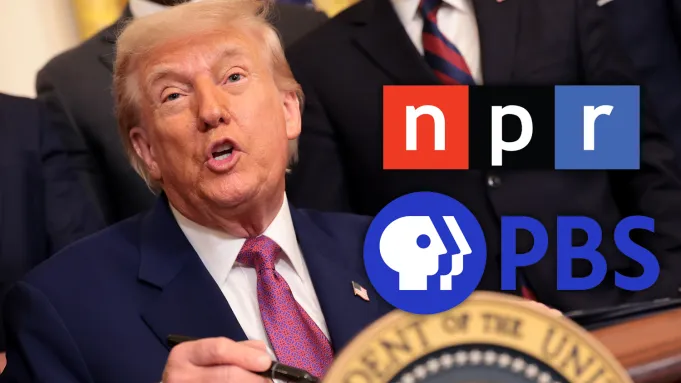
On Tuesday, March 31, 2026, a federal judge in Washington, D.C., issued a permanent injunction against the administration’s executive order that sought to eliminate all federal funding for the Corporation for Public Broadcasting (CPB), the parent organization of NPR and PBS.
The ruling represents a major victory for public media advocates and a significant legal setback for the administration’s “budgetary realignment” strategy.
The Ruling: “Congress Holds the Purse Strings”
U.S. District Judge Beryl Howell authored the 42-page opinion, grounding the decision in the Separation of Powers and the Impoundment Control Act of 1974.
- Violation of Statutory Duty: The judge ruled that the President does not have the unilateral authority to “zero out” funding that has already been appropriated by Congress. The CPB was established by the Public Broadcasting Act of 1967 specifically to act as a “buffer” between the government and public media.
- The “Purse Strings” Argument: “The Constitution is clear,” Judge Howell wrote. “The power of the purse resides with the Legislative Branch. An Executive Order cannot override a statutory mandate to distribute funds that Congress has explicitly set aside for the public interest.”
- Irreparable Harm: The court found that the immediate cessation of funding would have caused “irreparable harm” to hundreds of local member stations, particularly in rural areas where PBS and NPR are often the primary sources of news and educational programming.
The Administration’s Defense: “Wasteful Spending”
The Department of Justice had argued that the President was exercising his “inherent executive authority” to manage the federal budget and eliminate “wasteful, partisan-leaning” expenditures.
| Administration Argument | Court’s Rebuttal |
| Partisan Bias | The court ruled that “allegations of bias” do not grant the Executive the right to violate federal spending laws. |
| Budget Efficiency | The judge noted that the CPB’s $535 million budget is a “miniscule fraction” of federal spending and does not justify an emergency bypass of Congress. |
| Executive Discretion | The ruling clarified that “discretion” applies to how money is spent within a program, not whether to spend it at all. |
Reactions from Public Media
The CEOs of both NPR and PBS released a joint statement following the ruling, calling it a “win for the American people and the First Amendment.”
- NPR: CEO Katherine Maher stated that federal funding is “essential seed money” that allows local stations to raise the private donations that make up the bulk of their budgets.
- PBS: President Paula Kerger highlighted that the ruling ensures that “free, over-the-air educational content” remains available to the 1 in 3 Americans who do not have high-speed internet.
Political Fallout and Next Steps
The ruling has drawn sharp lines in the Senate, where leadership is already divided over the DHS shutdown and the SAVE Act.
- The White House: Press Secretary Karoline Leavitt slammed the decision as the work of an “activist judge” and confirmed that the Department of Justice will file an immediate appeal to the D.C. Circuit Court.
- Senate Republicans: Some fiscal hawks, such as Senator Rand Paul, have suggested that if the President cannot end the funding by order, the GOP should move to “defund the CPB” through the upcoming 2027 budget reconciliation process.
- “No Kings” Connection: Protesters at yesterday’s rallies in St. Paul and D.C. frequently cited the “attack on public media” as another example of executive overreach, making today’s ruling a symbolic victory for the movement.