 By Trendsetter Tribune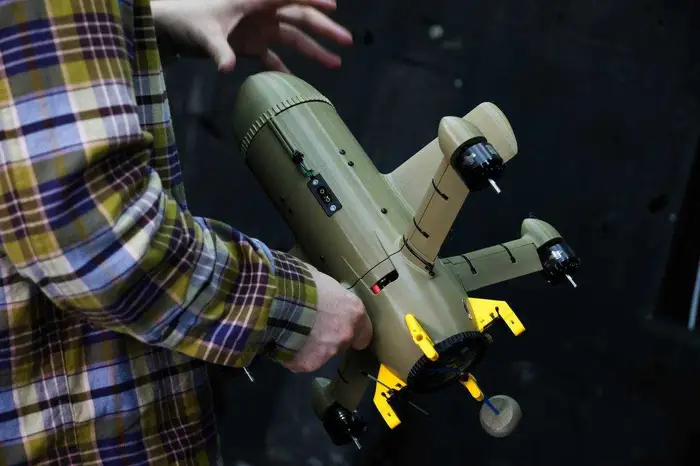
As of late March 2026, Ukraine’s defense strategy has undergone a radical shift, moving away from a reliance on expensive Western missiles to a domestic “interceptor-first” air defense model. Faced with nightly waves of Russian and Iranian-designed drones, Kyiv is now deploying autonomous and semi-autonomous interceptor drone swarms that have already achieved a 70% success rate in high-traffic zones like the Kyiv region.
The Ministry of Defence officially codified and authorized several new systems for frontline use this week, marking the “industrialization” of what was once an experimental grassroots effort.
The New Arsenal: “Shahed Hunters”
Ukraine has moved beyond jury-rigged FPV drones to purpose-built, high-speed interceptors designed specifically to hunt and destroy aerial targets at a fraction of the cost of a Patriot or Stinger missile.
- The JEDI Shahed Hunter: Authorized for operational use on March 23, 2026, this vertically launched multirotor can reach speeds of 350 km/h and altitudes of 6 km. It is designed to automatically acquire and home in on targets using radar data, effectively “slingshotting” into engagement zones to ram or detonate near enemy drones.
- The P1-Sun (SkyFall): A 3D-printed modular interceptor that costs roughly $1,000 per unit. According to manufacturer data from early March, this model has downed more than 1,500 Shaheds and 1,000 reconnaissance drones in just four months.
- Sea-to-Air Interceptors: In a tactical first, Ukraine is now testing interceptor drones launched from unmanned surface vessels (USVs) in the Black Sea. This allows interceptors to engage incoming threats over water before they reach coastal cities like Odesa.
The Shift to “Swarm” Technology
Military officials and analysts (including a recent 60 Minutes report on March 29) highlight that the next breakthrough is the integration of AI-driven swarm technology.
- Autonomous Coordination: Rather than requiring one operator per drone, new software allows a single pilot to launch a “package” of drones that communicate with each other to divide targets, bypass electronic warfare (EW), and maximize the “kill zone.”
- Cost Efficiency: While a single Patriot missile costs roughly $4 million, a swarm of 50 interceptors costs less than $100,000, making the defense economically sustainable against massed Russian raids.
- The “Library of Combat”: Ukraine is leveraging its unparalleled database of modern drone warfare to train AI models that can identify and intercept targets in total darkness or under intense jamming conditions.
March 2026: A Month of Records
The intensity of the drone war has escalated significantly this month:
- Strike Volume: Ukrainian forces launched over 110 drone strike packages against Russian targets in the first three weeks of March, including energy infrastructure and military factories.
- Massive Raids: Overnight on March 17-18, Ukraine launched one of the largest swarms of the war, with 250-300 kamikaze aircraft penetrating Russian airspace simultaneously.
- International Interest: The Pentagon and several Gulf states are reportedly in talks to purchase Ukrainian interceptor technology, as the world recognizes these systems as the only viable solution to the “Shahed-style” threats now proliferating globally.
Next Generation: Secure Communication
On March 30, 2026, Defense Minister Mykhailo Fedorov announced the testing of 18 new teams at the Brave1 training ground. The focus of this latest generation is secure, jam-resistant communication, ensuring that interceptor swarms can return to base or reach targets even when subjected to Russia’s most advanced electronic warfare systems.