 By Trendsetter Tribune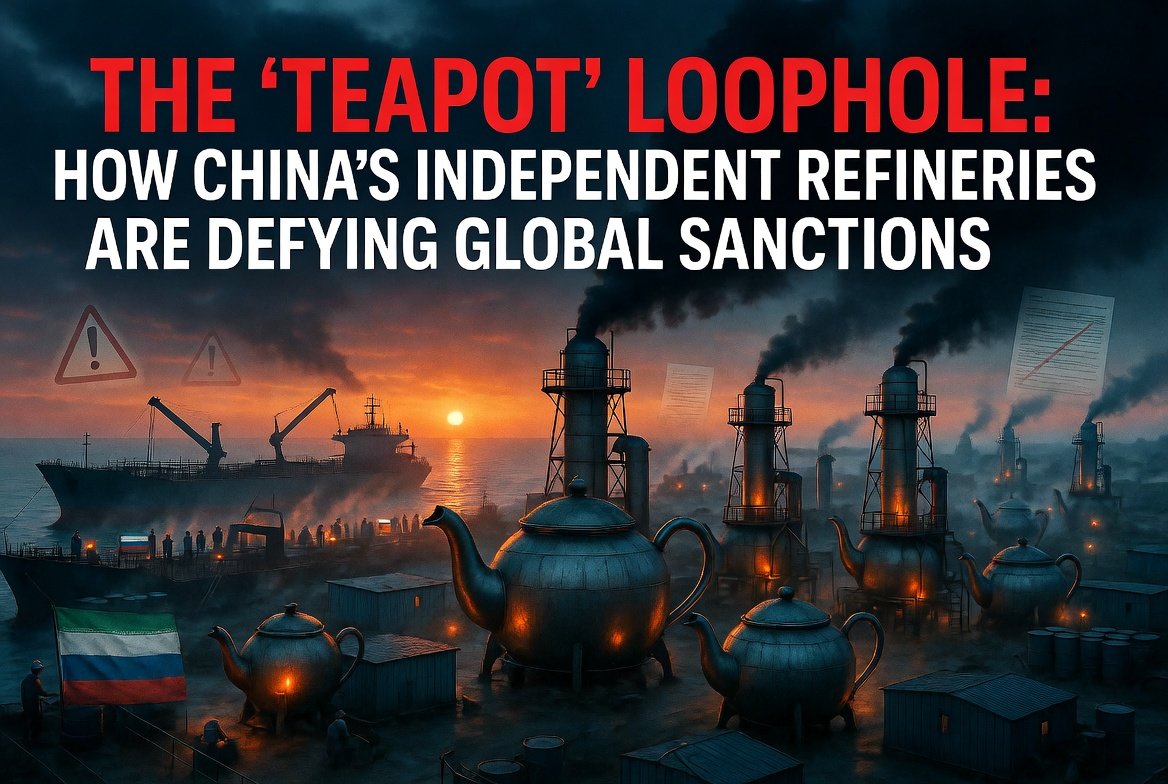
BEIJING — While the world’s major oil companies distance themselves from Tehran amid escalating military tensions and U.S. ultimatums, a quiet fleet of “teapot” refineries in China’s Shandong province is providing a critical financial lifeline to the Iranian regime.
These small, privately owned refineries—nicknamed “teapots” for their compact size—have become the ultimate masters of sanctions evasion, utilizing a sophisticated “shadow fleet” and alternative payment systems to keep the oil flowing.
Bypassing the Dollar
Unlike China’s state-owned giants like Sinopec, which fear being cut off from the U.S. dollar-based financial system, these independent refiners operate almost entirely outside of Western reach.
- Renminbi Settlements: Most transactions are now conducted using the Chinese Yuan (Renminbi) via the Cross-border Interbank Payment System (CIPS), rendering U.S. banking sanctions largely toothless.
- The “Dark Fleet”: Satellite imagery has confirmed a surge in ship-to-ship transfers in the South China Sea. Aging tankers often “go dark” by turning off their transponders before transferring Iranian crude to other vessels to disguise its origin.
The “Bargain Barrel” Strategy
As of early April 2026, the “Teapot Loophole” has allowed China to stockpile a massive strategic petroleum reserve—estimated at 1.2 billion barrels. By purchasing Iranian oil at a steep discount (sometimes as much as $11 below Brent crude), these refineries have been able to undercut global competitors and stabilize China’s domestic fuel prices while the rest of the world sees costs skyrocket.
However, recent reports suggest the tide may be turning:
- Narrowing Margins: As global supply tightens due to the Strait of Hormuz blockade, the “discount” on Iranian oil is shrinking.
- U.S. Pressure: The Trump administration has begun targeting individual teapot executives with secondary sanctions, aiming to squeeze the last remaining buyers of Iranian crude.
- Production Mandates: Beijing has reportedly ordered these refineries to maintain output “at all costs” to prevent a domestic energy crisis, even if it means operating at a financial loss.
Why It Matters to You
The continued operation of these refineries is the primary reason why Iranian oil hasn’t completely disappeared from the market. For the average consumer, this means that while gas prices are high, they would likely be significantly higher if these “teapots” stopped processing the 1.4 million barrels of Iranian crude they handle daily.