 By Trendsetter Tribune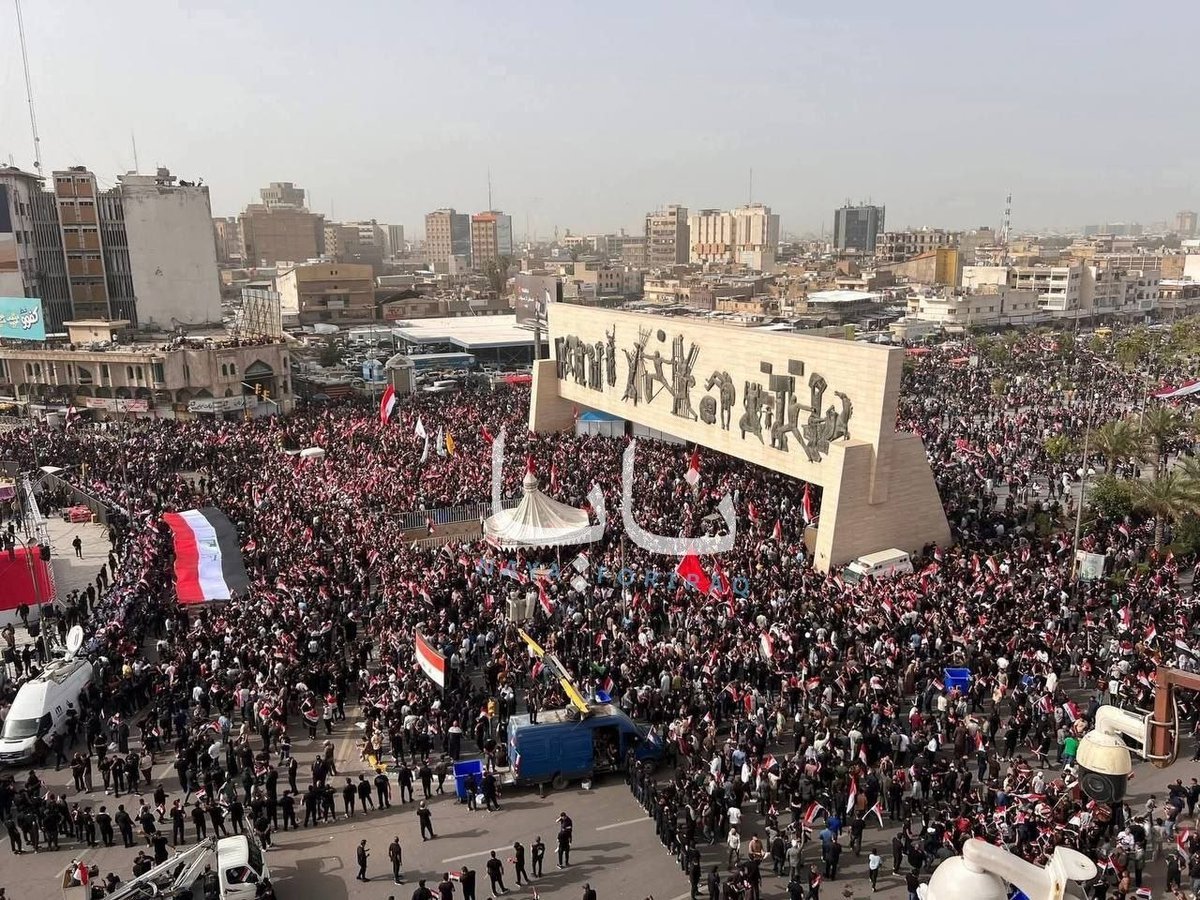
BAGHDAD, Iraq — The heart of Iraq’s capital was transformed into a sea of red, white, and black on Saturday as tens of thousands of protesters flooded Tahrir Square. The massive demonstration, called by the influential Shiite cleric Muqtada al-Sadr, marks a dangerous new chapter in the regional spillover of the U.S.-Iran conflict.
Under the shadow of the iconic Freedom Monument, the air was thick with chants of “No, no to America” and “No, no to Israel,” as demonstrators expressed fury over recent military strikes that have increasingly targeted Iraqi soil.
A Nation Caught in the Crossfire
While the primary war is between Washington and Tehran, Iraq has become the unintended—and unwilling—battleground.
- Retaliatory Strikes: Over the past week, U.S.-Israeli operations have targeted positions of the state-incorporated Popular Mobilization Forces (PMF), resulting in dozens of casualties.
- Militia Activity: In response, Iran-backed militias have escalated rocket and drone attacks on U.S. interests, including military bases and the heavily fortified Green Zone.
- Embassy Warning: Just 48 hours ago, the U.S. Embassy in Baghdad urged all American citizens to depart the country immediately, citing credible threats that “terrorist militia groups” intended to conduct high-profile attacks in central Baghdad.
Sadr’s Calculated Power Play
The presence of Sadr’s followers adds a volatile layer to the protests. Unlike the pro-Iran factions, Sadr’s movement is rooted in Iraqi nationalism. By mobilizing the masses today, Sadr is sending a two-fold message:
- To the West, that the Iraqi people will not tolerate their country being used as a staging ground for a regional war.
- To Tehran-backed rivals, that he remains the only leader capable of commanding the “Iraqi street.”
“Today’s demonstration is an expression of rejection of aggression and injustice throughout the world, not just in Iraq,” said Dhirgham Samir, a 40-year-old protester in the square. “This is a senseless war targeting civilians.”
Economic Paralyzation
Beyond the physical violence, the Strait of Hormuz blockade is strangling the Iraqi state. With 80% of Iraq’s oil exported through southern terminals and the Strait, the government’s primary source of revenue has vanished.
- Salary Crisis: Baghdad officials warn that without a resolution to the energy blockade, the government may struggle to pay public sector salaries by next month.
- Energy Shortages: The recent strike on Iran’s gas infrastructure has led to widespread power outages across Baghdad, as Iraq relies heavily on Iranian imports to keep its grid running.
As the sun sets over the Tigris, the crowds in Tahrir Square show no signs of dispersing. With the U.S. 48-hour ultimatum to Iran set to expire Monday, the people of Baghdad fear that the worst is yet to come.