 By Trendsetter Tribune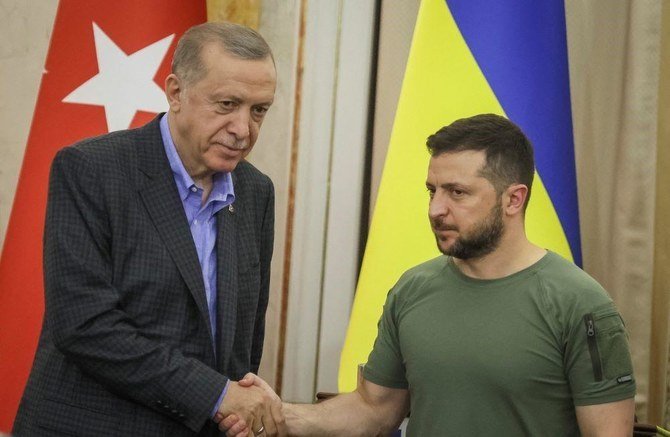
ISTANBUL, Turkey — On Saturday, April 4, 2026, Ukrainian President Volodymyr Zelenskyy arrived at the historic Dolmabahçe Palace for high-stakes negotiations with Turkish President Recep Tayyip Erdoğan. The meeting comes at a critical diplomatic juncture as Kyiv seeks to stabilize global food markets and protect its energy infrastructure from a renewed wave of Russian strikes.
The centerpiece of the discussion is the potential revival of a formalized maritime corridor—often dubbed “Grain Deal 2.0”—aimed at ensuring the safe passage of foodstuffs through the Black Sea.
Beyond the Grain: Energy Infrastructure at Risk
While the original 2022 agreement focused on wheat and corn, the 2026 talks have expanded to include energy supply security.
- The Easter Truce: Zelenskyy is reportedly pushing for a temporary ceasefire specifically covering energy infrastructure ahead of the Orthodox Easter holidays (April 12).
- Pipeline Tensions: The meeting follows recent accusations from Moscow that Ukraine attempted to target the TurkStream gas pipeline, a vital link supplying Russia’s gas to Turkey and several European nations. Zelenskyy has denied these claims, instead emphasizing the need for a mutual halt in attacks on power substations and transformers.
- Joint Field Development: In a surprising move, Zelenskyy confirmed that the leaders discussed joint development of Black Sea gas fields and the modernization of gas infrastructure to reduce regional dependency on contested routes.
Turkey’s Balancing Act
President Erdoğan, positioning Turkey as a “Safe Haven” for diplomacy, reiterated his readiness to host full-scale peace talks between Moscow and Kyiv.
“Türkiye attaches great importance to the safety of navigation in the Black Sea,” Erdoğan stated. “The region requires greater peace and stability, and we are determined to expand our role as a neutral mediator.”
For Ankara, the stakes are not just diplomatic but economic. As Turkey’s population reaches 86 million and inflation remains a central concern for the Central Bank, stabilizing Black Sea trade is a domestic necessity.
The “Stolen Grain” Controversy
The talks in Istanbul are shadowed by a growing international scandal regarding grain sourced from occupied territories. Just 24 hours prior to his Turkey visit, Zelenskyy announced a major diplomatic win: Egypt has officially agreed to stop accepting grain exported by Russia from occupied Ukrainian regions.
With Russia projected to produce 87 million tons of wheat in 2026, the battle for market legitimacy is as intense as the battle on the front lines. Kyiv is working to ensure that any “Grain Deal 2.0” includes strict tracing mechanisms to prevent the “institutionalization” of seized assets.